Investing in safety, peace of mind, and ID scanners can help bars and nightclubs reduce preventable risks, protect their bottom line, and create safer environments. For some venues, Patronscan’s ID verification solutions cost less than 2 hours of revenue per month.
Introduction
At the heart of every thriving bar and nightclub is a commitment to safety. While optimism and hospitality are essential to the industry, the risks of violence, fraudulent identification, and other incidents make proactive safety measures important for every venue operator.
How much can a safety incident cost a bar or nightclub? A single incident can potentially cost the equivalent of a week’s revenue, once direct expenses and operational disruption are considered. Legal liabilities and reputational damage can increase the financial impact even further.
So, how can venue owners protect their patrons, staff, and business while maintaining a positive guest experience?
The first step is understanding the true cost of safety incidents and identifying practical ways to prevent them.
Understanding the Direct Financial Cost of Safety Incidents
Imagine a busy night of revelry being ruined by a single violent act. Patrons or employees may be injured, property may be damaged, and the venue may need to close temporarily for cleanup and restoration.
Real-world examples illustrate the consequences.
A bar brawl in Pittsburgh resulted in a staff member being stabbed and taken to the hospital, while the venue lost revenue due to the shutdown for cleanup and restoration.
A Restaurant Confessional series post on VICE describes how a Manchester venue went from earning £50,000 a night to less than £10,000 on most nights after a major bar brawl. The incident reportedly injured patrons and staff, caused extensive property damage and resulted in the venue surrendering its liquor licence.
These examples demonstrate how a safety incident can affect more than the immediate cost of repairs. A venue may also face medical expenses, legal liabilities, lost inventory, insurance complications and lost revenue.
Insurance may cover certain losses, but coverage depends on the policy and circumstances. Hospital expenses, legal liabilities, insurance claims and potential premium increases can still create significant financial pressure.
Consider these potential direct costs from a single incident:
- Hospital bills: $10,000 or more.
- Damaged furniture: $5,000 to replace.
- Missing inventory: $2,000 to replace.
- Damaged television: $1,000 to replace.
At the lower end of these estimates, a single event could cost approximately $10,000 in direct expenses.
Actual costs vary depending on the severity of the incident, the venue and its insurance coverage.
A Week’s Work for a Moment’s Crisis
Let’s put these figures into perspective by comparing them with your venue’s revenue.
If you’re generating $500,000 annually across a 56-hour operating week, you’re making roughly $171.65 per hour.
To recover approximately $10,000 in direct costs, you’d need to dedicate about 58 hours of operation. That’s an entire week’s revenue sacrificed to recover from the direct costs of one safety incident.
And this calculation considers only the direct expenses. Legal costs, operational disruption and reputational damage can add substantially to the total financial impact.
The Hidden Costs of Safety Incidents
The direct financial toll is only part of the picture. Legal fees, fines, staffing challenges, operational disruptions and administrative work can add considerably to the total cost.
Legal fees and fines can average between $15,000 and $30,000.
A Milwaukee tavern had to pay a $1.9 million settlement for negligence after a customer was paralyzed in a bar fight with another patron. The argument that another patron was responsible for the injury did not prevail in court.
Operational disruptions and hiring temporary staff can incur costs of $10,000 to $20,000.
Wages paid during work stoppages and administrative time spent handling incidents may add another $5,000 to $10,000 each.
Depending on the severity of the incident, total indirect costs can reach upwards of $65,000, significantly straining a business’s finances.
When direct and indirect expenses are combined, the overall financial fallout can reach $75,000 per incident. For a local bar or nightclub, this is more than a minor setback; it can place considerable pressure on business resources.
These figures are estimates, and actual costs depend on the incident, the venue and the resulting legal and operational consequences.
The Long-Term Impact of Reputational Damage
The financial consequences do not necessarily end when the venue reopens.
As the Manchester example illustrates, a serious incident can affect revenue well beyond the night it occurs.
In the nightlife industry, reputation matters. Negative publicity, online reviews and social media discussions can undermine customer trust and reduce repeat visits, bookings and long-term revenue.
Although reputational damage is difficult to quantify, protecting customer confidence is an important part of protecting a venue’s financial future.
How Can Bars and Nightclubs Reduce Safety Risks?
Venue operators can take a multi-layered approach to safety, combining trained staff, appropriate security measures, surveillance and technology.
Additional security personnel and enhanced surveillance can help manage risks, but their cost and effectiveness depend on the venue’s needs and operating environment.
Regular staff training in conflict resolution and emergency response is also important. However, training alone cannot eliminate every risk, and a comprehensive strategy should include preventive measures.
The goal is to prevent incidents where possible, deter inappropriate behavior and give staff the information they need to make informed decisions.
For bars and nightclubs, ID verification can be one part of this approach.
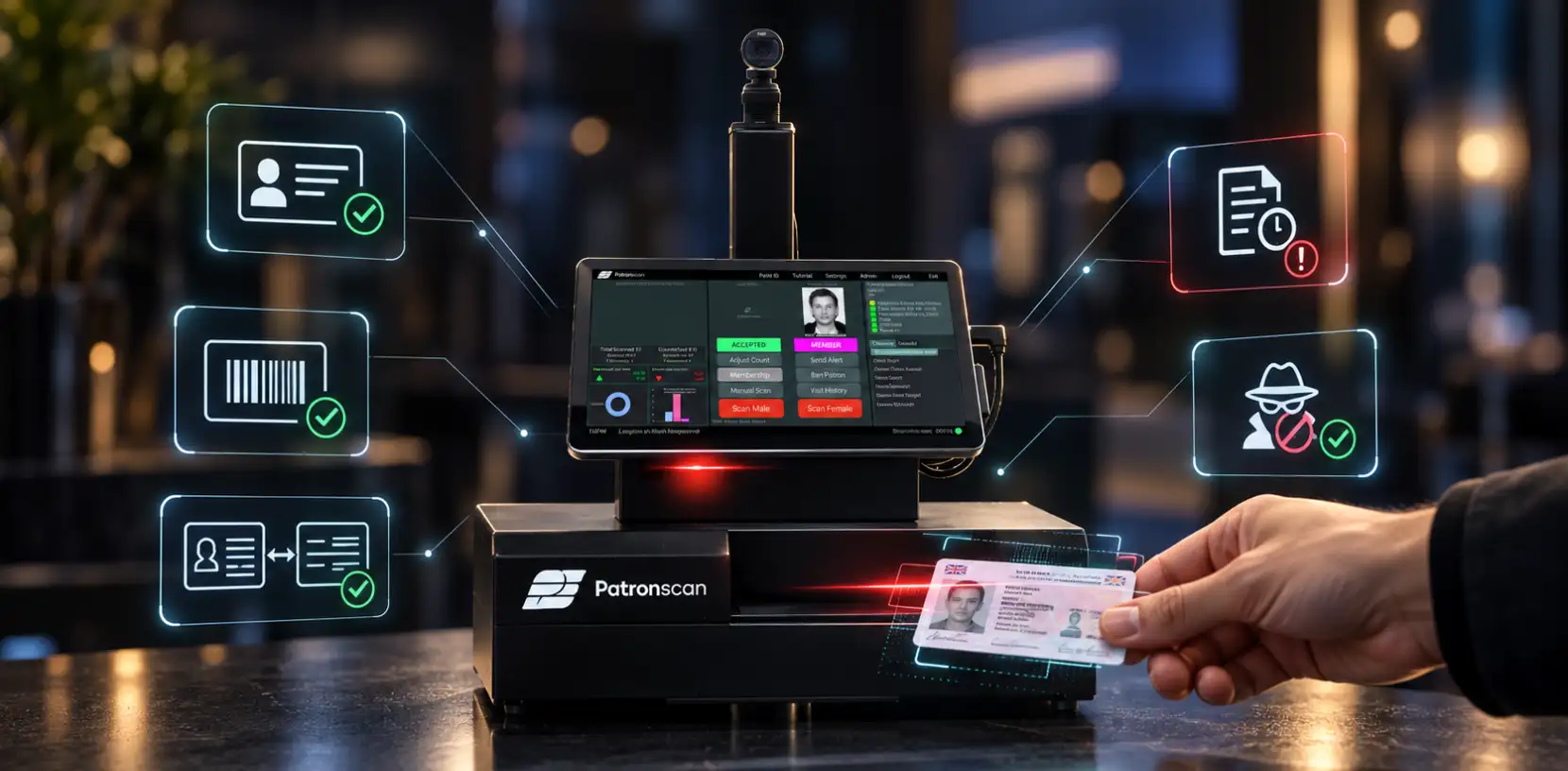
Patronscan’s ID verification solutions help venues check identification, support age verification and identify potentially fraudulent documents.
To explore the available approaches in more detail, read Patronscan’s comprehensive guide to ID verification for bars and nightclubs.
Mitigating Risks With ID Verification
ID verification can help bars and nightclubs move beyond basic regulatory checks and support a more consistent approach to entrance security.
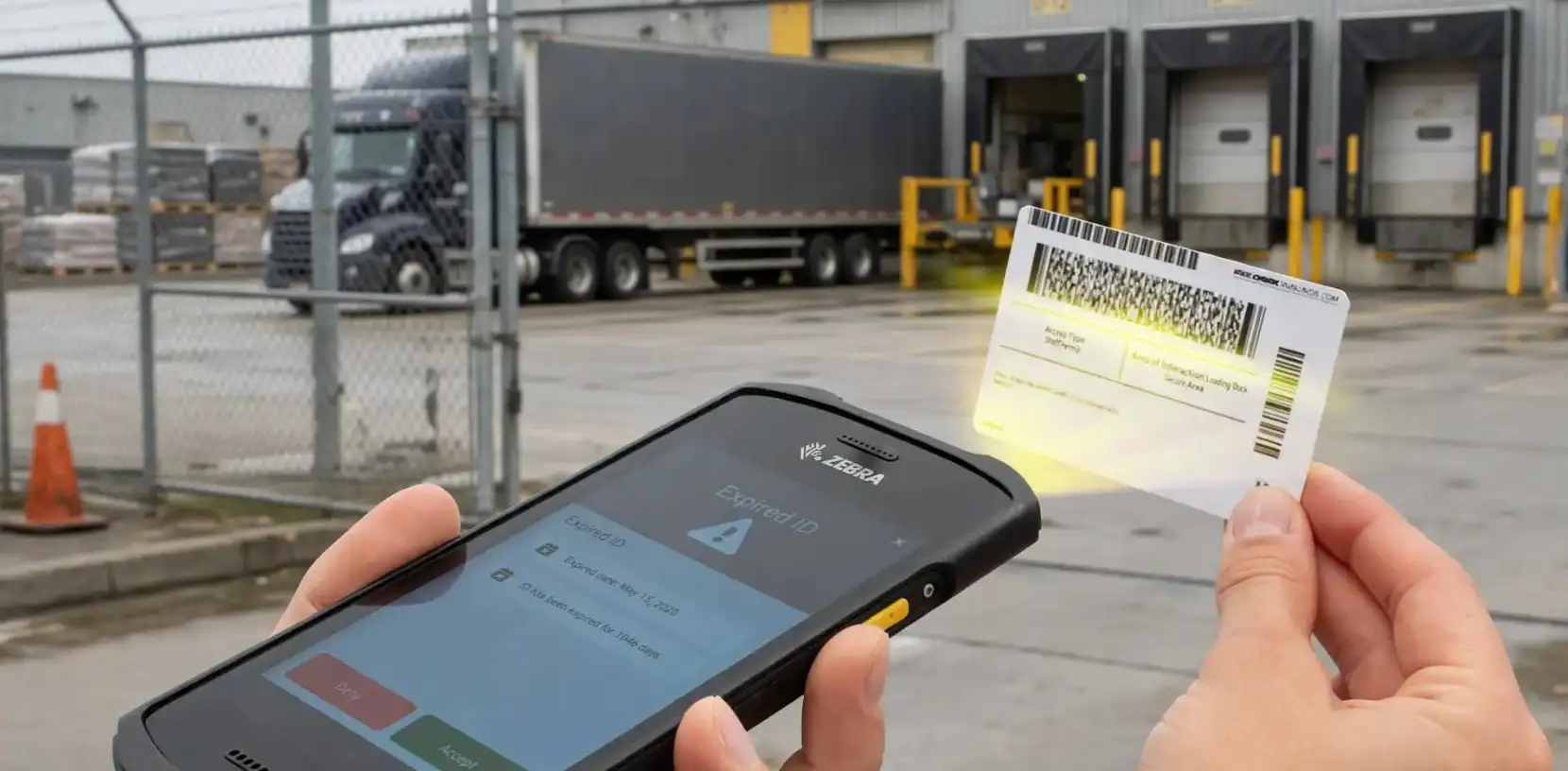
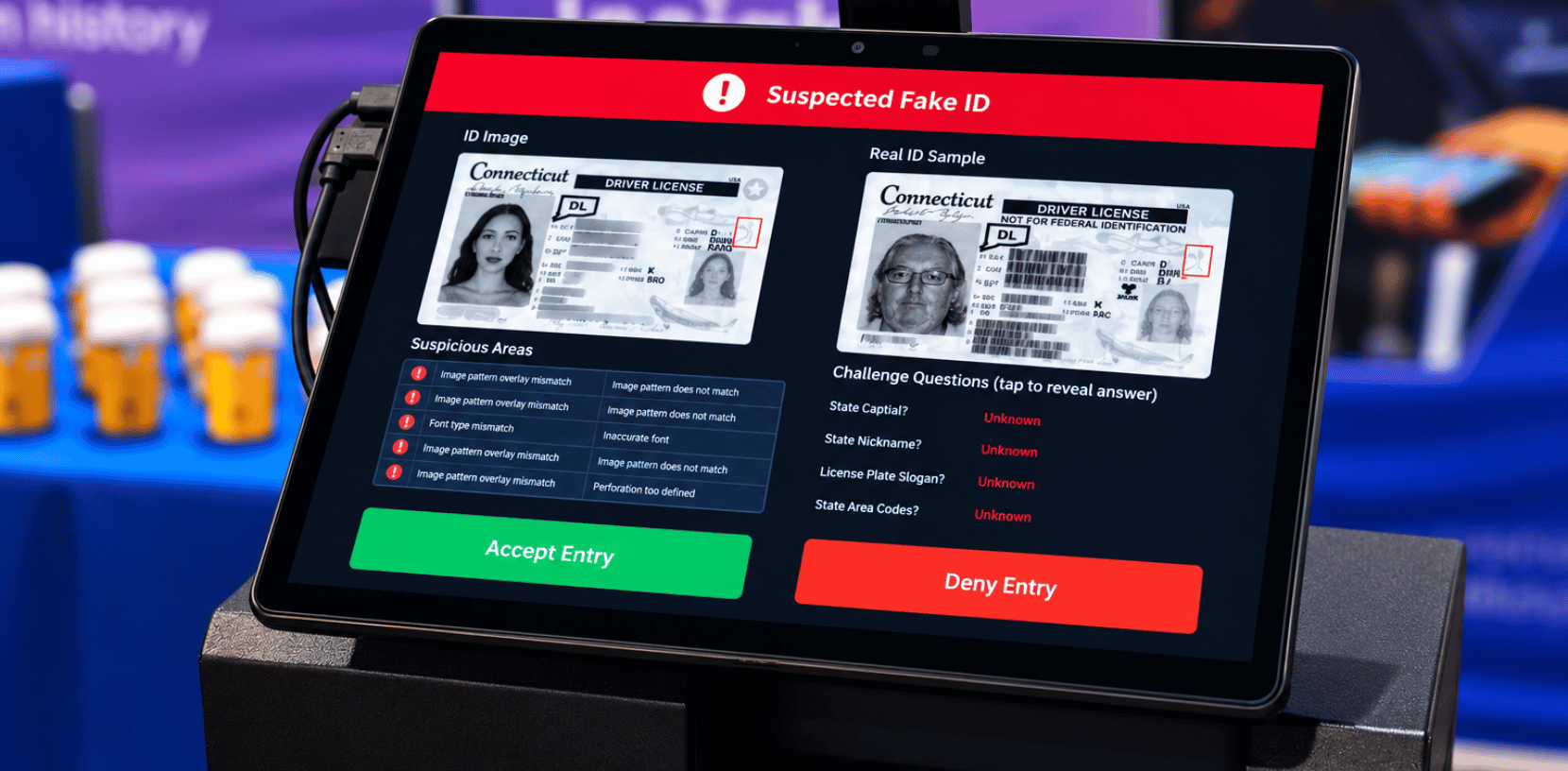
Forensic ID verification systems examine identification documents to help detect fake or altered IDs, identify expired documents and support age verification.
Patronscan’s forensic ID verification technology performs more than 8,500 checks per scan across more than 14,000 ID and document types.
Learn more about Patronscan’s fake ID detection technology.
One of the key benefits of ID verification is deterrence. Consistent screening can help staff identify suspicious identification and manage entrance procedures more effectively.
When incidents do occur, ID verification and scan records can also support accountability and follow-up.
The Patronscan Flag Network: Helping Venues Identify Previously Flagged Patrons
Patronscan’s Shared Flag Network allows participating establishments to flag patrons through a private internal network or a public, industry-wide network.
When these patrons present their IDs at other participating establishments, staff may receive alerts displaying relevant flag information.
Venues can place internal flags for a period of up to 5 years, while a public, industry-wide flag can remain for up to 1 year, subject to applicable policies and requirements.
Customers make their own admission decisions based on the available information and their venue policies.
Patronscan scan history has also helped customers and law enforcement, as part of official investigations, identify individuals associated with previous incidents.
By connecting ID verification with relevant flag information, venues can improve awareness of previously reported concerns and make more informed entrance decisions.
Patronscan customers have reported a reduction of up to 95% in incidents at their establishments after implementing the technology. Results vary by venue, and this figure should not be interpreted as a guaranteed outcome for every business.
Adopting advanced ID verification technology is a strategic investment, not simply another operating expense. It can support a broader safety strategy designed to protect staff, patrons, finances and reputation.
Potential Insurance Benefits
Proactive safety measures may also provide insurance-related benefits.
Some insurance providers recognize certain risk-management measures when evaluating businesses and may offer discounts to eligible venues. However, discounts depend on the provider, policy and eligibility requirements.
SHOP Insurance offers discounts on insurance premiums for venues that have Patronscan. Venue operators should confirm current availability, eligibility and applicable terms directly with the insurer before including potential savings in their financial calculations.
Balancing Safety Benefits and Costs
In an industry driven by customer experience and operational efficiency, safety investments must balance practicality, effectiveness and cost.
Many safety enhancements require resources and ongoing investment. ID verification can support entrance procedures by helping staff check identification consistently, identify suspicious documents, and receive relevant alerts.
Patronscan offers ID scanning solutions for bars and nightclubs, including its Elite 2.0 system, to support venues’ safety and compliance strategies.
The investment should be evaluated against the potential costs of incidents, operational requirements, and measurable benefits. Relevant considerations include the consistency of ID checks, the ability to identify suspicious identification, incident documentation, and any confirmed insurance savings.
For a venue generating $500,000 annually and operating 56 hours per week, the original example estimates revenue at approximately $171.65 per operating hour. At that rate, two hours of revenue represents approximately $343.30.
The original comparison positions an ID verification solution as costing less than two hours of revenue per month. Venue owners should confirm the current price of the relevant solution and compare it with their own revenue and operating figures to determine whether that comparison applies to their business.
A proactive safety strategy is an investment in protecting the venue’s staff, patrons, reputation, and financial stability.
Conclusion
Safety incidents can have significant financial consequences for bars and nightclubs. Medical expenses, damaged property, legal liabilities, operational disruptions and reputational harm can all affect a venue’s bottom line.
Although no single measure can eliminate every risk, proactive safety procedures can help businesses manage preventable risks and create a safer environment for staff and patrons.
For venues that need to enforce age restrictions and strengthen entrance security, forensic ID verification can help identify suspicious identification, support age verification, and provide additional information about flagged patrons.
Protect your venue, your reputation, and your bottom line with a proactive approach to safety.
Discover how Patronscan’s ID verification solutions can support your venue’s approach to entrance security, age verification and risk management.
Sources:
https://www.warshafsky.com/Settlement/BarFightNegligence
https://www.vice.com/en/article/j5qvby/how-to-survive-a-bar-brawl